
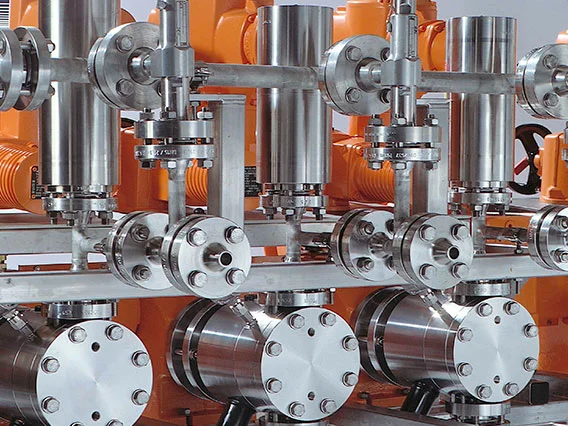
Pulsation dampeners are essential components in industrial pumping systems and processes where a constant and stable flow is required. Their main function is to reduce pressure fluctuations caused by pump pulsations, protecting pipelines, valves, and other sensitive equipment. However, like any mechanical component, pulsation dampeners have a limited service life that can be shortened if proper measures are not taken. In this article, we will explore practical strategies and technical recommendations to maximize the durability of these devices, avoiding premature failures and reducing maintenance costs.
1. Proper dampener selection
The first step in ensuring a long service life is choosing a dampener that is suitable for the specific application. Key factors to consider include:
• Dampener volume and capacity: A dampener that is too small can quickly become saturated.
• Construction materials: Materials must be compatible with the fluid circulating in the system as well as with temperature and pressure conditions. It is essential to understand the fluid and its properties when selecting a pulsation dampener in order to choose the most appropriate materials and designs.
• Type of dampener: Depending on the application, options include bladder, diaphragm, or bellows dampeners, each with specific characteristics that affect durability.
Choosing the right dampener from the start is the best way to ensure efficient long-term operation. At HIDRACAR, we provide guidance to all our clients and help find the ideal dampener for each case.
2. Correct installation
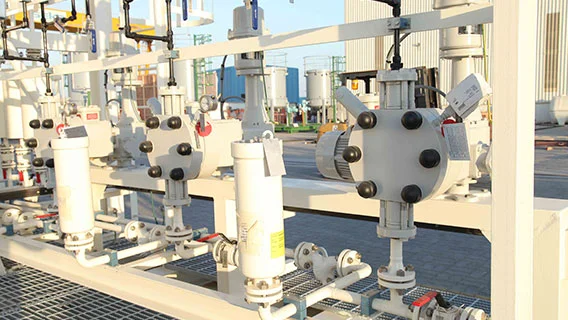
An improperly installed pulsation dampener can suffer premature wear. To maximize its lifespan, the following recommendations should be followed:
• Install it as close as possible to the pump: This ensures the dampener effectively absorbs pulsations before they propagate throughout the piping system.
• Follow the manufacturer’s instructions: Each design may require specific orientation and pre-charge pressure conditions.
Proper installation reduces the risk of early failure and ensures consistent performance.
3. Preventive maintenance
Regular maintenance is crucial to extending the service life of any pulsation dampener. Recommended steps include:
• Periodic inspections: Check the condition of separators, seals, and charging valves. Leaks or deformation indicate wear.
• Pressure checks: Ensure that internal pressure remains within the manufacturer’s recommended range. Incorrect pressure can compromise effectiveness and damage components.
• System cleaning: The accumulation of sediment or impurities in the fluid can damage the separator element. Maintaining filters in good condition and periodically cleaning the system extends the dampener’s life.
• Operational data recording: Keeping a performance history helps detect patterns that may indicate problems before serious failures occur.
Preventive maintenance not only increases durability but also improves system efficiency.
4. Avoid pressure spikes and excessive pulsations
A critical factor in the lifespan of a dampener is the magnitude of the pulsations and pressure spikes it must absorb. Systems with frequent pressure spikes or excessive pulsations can quickly degrade internal components. To minimize this risk:
• Proper sizing of the pulsation dampener: Dampeners must have sufficient volume to absorb flow oscillations caused by reciprocating pumps. It is recommended not to use allowable residual pulsation values higher than ±5% in calculations.
• Install safety valves and pressure regulators: This protects both the dampener and the system from unexpected pressure spikes.
• Pre-charge control: Verify that the dampener pre-charge is appropriate for its operation.
• Monitor pulsation frequency: Advanced control systems allow parameter adjustments to reduce pressure variations.
Controlling pulsations prevents internal damage and ensures long-lasting operation.
5. Use of original spare parts
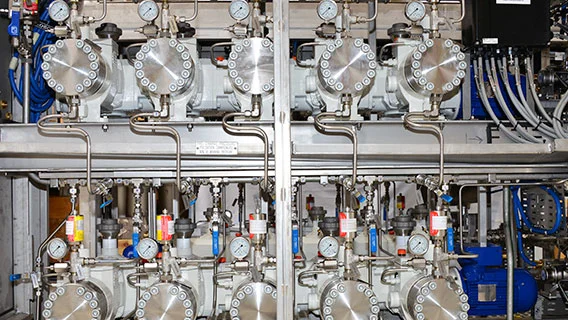
When component replacement is required, it is always advisable to use original manufacturer spare parts. This ensures:
• Compatibility with the dampener’s design and materials.
• Maintenance of pulsation absorption efficiency.
• Avoidance of premature failures caused by lower-quality generic components.
Investing in original spare parts is a preventive measure that protects long-term investment.
Extending the service life of a pulsation dampener depends on a combination of proper selection, correct installation, regular maintenance, and control of operating conditions. Implementing these strategies not only reduces the likelihood of failure but also improves system efficiency, protects other equipment, and lowers maintenance costs.
At Hidracar SA, we specialize in the design and manufacturing of pulsation dampeners tailored to the needs of each industry. Having a properly sized and maintained dampener ensures reliable and safe operation of your industrial pumping systems.
Remember: a pulsation dampener is not just an accessory, but a key element for the durability and efficiency of your installation.
NOTICIAS RELACIONADAS
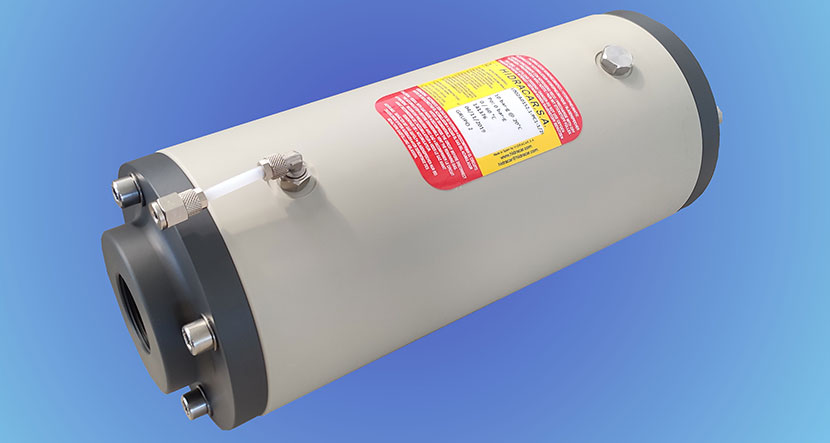
Hidracar new launchment: in-line plastic dampers cleanable without dismantling
HIDRACAR has developed different in-line solutions for pulsation dampers. In HIDRACAR, during our 45 years expertise in the design and manufacture of…
Read More
NEW AND UNIQUE RESONATOR
Dear Customer, We are pleased to inform you that we are celebrating our 50th Anniversary during this year, 2024. Throughout…
Read More
WHY USE A HIDRACAR PULSATION DAMPENER?
We have been designing adequate pulsation dampeners for all uses since 1974, improving them in a continuous effort to meet our…
Read More