
We make liquids flow smoothly trough pipes
Pulsation dampeners (also called pulsation dampers) are used for stabilizing the flow and the pressure in circuits with volumetric or dosing pumps. They are used in a wide range of applications.
A pulsation damper is a container with gas inside, normally dry nitrogen.
In every pulsation damper there is a separator element between the gas it is charged with and the liquid of the circuit; its basic function being to avoid the leaking of the gas into the circuit. This separator element is basically made of two kinds of materials: Rubber (NBR, EPDM, FPM, butyl, silicone, etc…) or a thermoplastic material (normally PTFE); although it can also be made in stainless steel.
When a rubber separator element is used, the dampener is called bladder type. If the material is PTFE, we refer to membrane type and bellows type dampeners, depending on the shape of the separator element.
The bellows can also be made of stainless steel, to suit special dampers designed for working with high temperature liquids.
Choosing between different types of damper depends on characteristics of the circuit like working pressure, temperature and chemical compatibility between the liquid and the material of the separator.
All our pulsation dampers are made according to the European PED-2014/68/EU pressure vessels regulations, and their design meets the AD-2000, UNE-EN 14359 and ASME SEC. VIII Div.1..
We can supply all of our dampers with different circuit connection gauges as well as fitted with whatever flange, either screwed on, welded or integrated, to suit the customer’s needs.
Below you’ll be able to see the REFERENCE CODE IDENTIFICATION of our pulsation dampers. Ask us about our pulsation dampeners prices.



Pulsation dampers: Essential technology for stable & efficient fluid systems
Pulsation dampeners (also universally known as pulsation dampers or pulse dampers) are critical components engineered to eliminate pressure fluctuations and stabilize flow in hydraulic and process circuits equipped with positive displacement pumps, such as volumetric or dosing pumps.
By absorbing and smoothing out the inherent pressure spikes and pulses generated by these pumps, they protect sensitive instrumentation, reduce pipe fatigue and vibration, minimize noise, and enhance the overall efficiency and longevity of the entire system.
Their application is vast and crucial across a diverse range of demanding industries including chemical processing, petrochemical, water and wastewater treatment, oil & gas, pharmaceuticals, and food & beverage.
Core technology & operating principle
At its most fundamental, a pulsation damper is a high pressure vessel pre-charged with an inert gas, typically dry nitrogen. This gas charge is separated from the process fluid by a flexible, impermeable barrier. When a pump discharge pulse enters the damper chamber, it compresses the gas charge rather than transmitting a shockwave through the pipeline.
This compressed gas then expands during the low-pressure phase of the pump cycle, effectively "filling in" the trough and creating a near-constant, laminar flow downstream.
The separator element: Heart of the pulsation damper and key to selection
The separator element is the crucial interface between the gas charge and the process fluid, and its design defines the pulsation damper type. The selection of the correct material and style is paramount for performance, compatibility, and durability.
- Bladder-Type Dampeners: Feature a flexible, rubber bladder (typically made from NBR, EPDM, FPM, butyl, or others) that expands and contracts with the high pressure pulses. They offer excellent gas retention and are suitable for a wide range of general applications.
- Membrane / Bellows-Type Dampeners: Utilize a convoluted diaphragm or bellows, most commonly made from PTFE for exceptional chemical resistance. Stainless steel bellows are employed for applications involving extreme temperatures or where elastomeric or plastic materials are unsuitable.
Choosing the optimal damper type depends directly on your system's specific characteristics: maximum working pressure, operating temperature range, and, most critically, the chemical compatibility between the process fluid and the separator material.
Engineering, compliance, and customization at Hidracar
At HIDRACAR, we engineer and manufacture pulsation dampers to the highest standards of safety and performance.
- Certified Design & Manufacturing: All our pulsation dampers are manufactured as CE-marked pressure vessels in full compliance with the European Pressure Equipment Directive (PED 2014/68/EU). Our designs are rigorously calculated and verified according to recognized codes such as UNE-EN 13445, UNE-EN 14359, and ASME Section VIII, Division 1, ensuring global acceptability and operational safety.
- Total Customization: We understand that standard connections often don't suffice. Therefore, we can supply any of our dampers with a wide variety of circuit connection threads and port configurations. Furthermore, we can fit them with custom flanges—screwed, welded, or integrally manufactured—to match your existing piping or skid design perfectly.
Global expertise and application support
HIDRACAR is a trusted partner to leading dosing pump manufacturers and system integrators worldwide. Our pulsation dampeners are deployed in over 70 countries, solving flow stability challenges in the most critical chemical, petrochemical, and water treatment plants. We specialize not only in standard solutions but also in engineering high pressure pulsation dampers for the most severe service conditions.
Use our dedicated online sizing tool below to calculate the optimal damper volume (in liters) required for your application based on admissible residual pulsation. Simply input your pump type and key performance parameters for a preliminary specification.
Applications of pulsation dampers
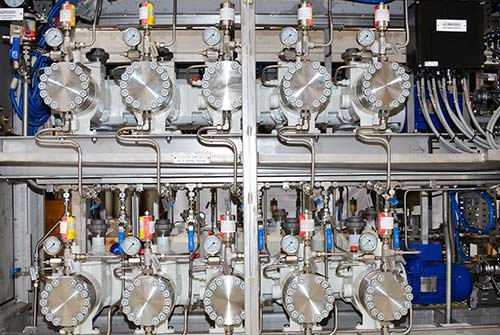
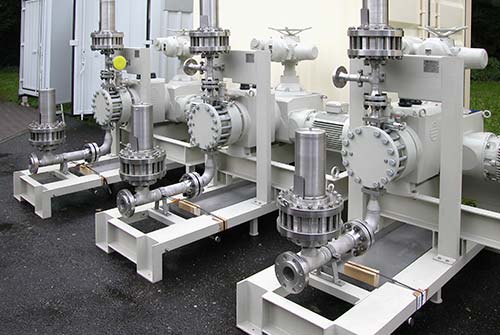
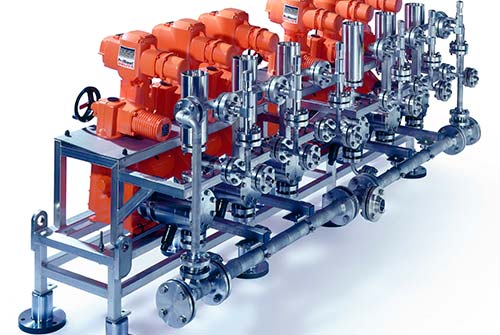
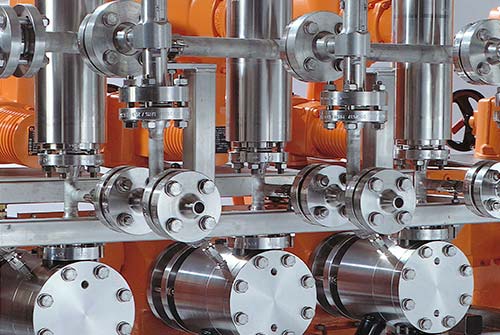
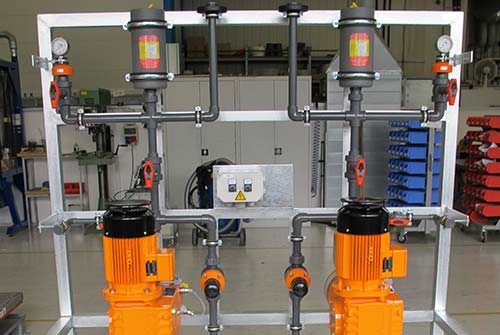
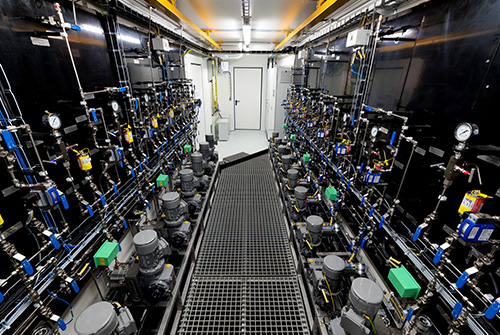
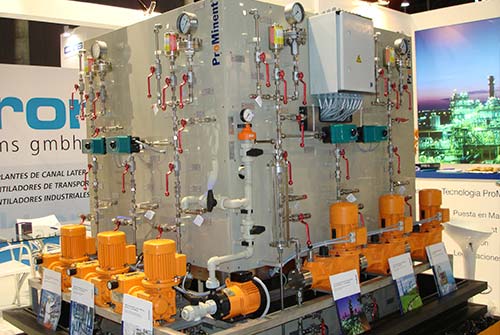
In HIDRACAR S.A. we manufacture pulsation dampers for installation in circuits equipped with dosing pumps.
We supply our equipment to the main manufacturers of dosing pumps worldwide, as well as to the main engineering responsible for the development of dosing systems.
Our pulsation dampers are being used in the chemical, petrochemical and water treatment industry in more than 70 countries. Ask about our high pressure pulsation dampers.













Download documents:
- QUESTIONNAIRE FOR SIZING AND SELECTING PULSE DAMPERS
- BDOS CATALOGUE FOR PULSATION DAMPERS
- SELECTION GUIDE FOR PULSATION DAMPERS
- TECHNICAL ARTICLES:
- PULSATION DAMPERS TECHNICAL ARTICLES
- ADVANTATGES AND INCONVINIENCES USING PULSATION DAMPERS WITH AND WITHOUT SEPARATOR ELEMENT
- INCUESTIONABLE ABENEFFITS OF INSTALLING A PULSATION DAMPER IN THE SINGLE EFFECT PISTON PUMPS
- SOME CONSIDERATIONS ON CHOOSING THE SIZE OF A PULSATION DAMPER
- PULSATION DAMPERS APPLICATION IN PNEUMATIC PUMPS
- SUCTION PULSATION DAMPENERS FOR PRESSURES BELOW 1 BARA
- PULSATION DAMPERS TECHNICAL ARTICLES
- IDENTIFICATION REFERENCE CODE OF PULSATION DAMPERS
- INSTRUCTIONS AND MANUALS
- INSTRUCTIONS FOR THE USE, MAINTENANCE AND DISMANTLING OF DAMPERS
- INTRUCTIONS FOR THE INSTALLATIONS AND STARTING-UP OF DAMPERS
- INSTRUCTIONS FOR THE USE, MAINTENANCE AND DISMANTLING OF SS NON-REPLACEABLE BELLOWS DAMPERS
- INSTRUCTIONS FOR THE USE, MAINTENANCE AND DISMANTLING FOR INLINE PULSATION DAMPERS
- MAINTENANCE AND REPAIR INSTRUCTIONS FOR STAINLESS STEEL BELLOWS PUSLATION DAMPENERS WITH A TRANSFER SYSTEM
- INSTRUCTIONS FOR THE ATTACHEMENT OF GAS CHARGING VALVE SEAL
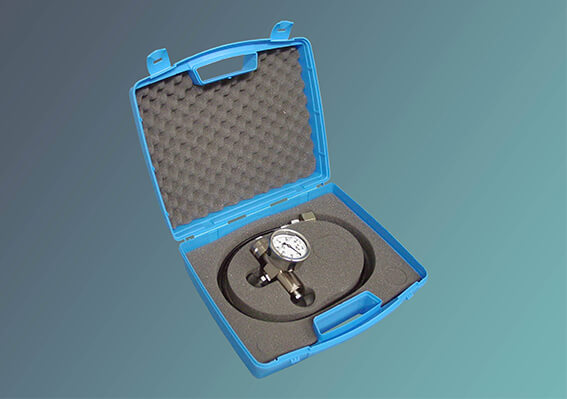
- INSTRUCTIONS FOR THE GAS VERIFICATION AND CHARGING BLOCK UP TO 600BAR
- INSTRUCTIONS FOR THE GAS VERIFICATION AND CHARGING BLOCK FOR HIGH PRESSURE 1000BAR
- INSTRUCTIONS FOR THE USE OF THE HIDRACAR BV-VAC VACUUM KIT
- INSTRUCTIONS FOR THE USE OF THE BLADDER DISMANTLING TOOL
- INSTRUCTIONS FOR DISMANTLING HIDRACAR VERY HIGH PRESSURE GAS CHARGING VALVES
- INSTRUCTIONS FOR THE USE OF THE QUICK DISMANTLING SYSTEM IN BLADDER DAMPERS
- SAFETY SYSTEMS FOR FIRE PROTECTION AND OVERPRESSURE RELEASE IN PULSATION DAMPERS
- INSTRUCTIONS FOR PERIODICAL CLEANING OF BLADDER DAMPERS
CALCULATE THE VOLUME (Vo) OF THE PULSATION DAMPER
In the application below, you’ll be able to size the pulsation damper (in liters) according to the value of the admissible residual pulsation. You’ll just need to introduce the pump type and its principal’s performance details.
RESULTS