

In hydraulic systems and fluid transport installations, maintaining stable pressure is essential to ensure efficient, safe, and long-lasting operation. However, certain phenomena can disrupt this stability and cause significant problems for equipment and installations. One of the most common is pressure pulsation in pipes and hydraulic systems. If these fluctuations are not properly controlled, they can cause vibrations, noise, leaks, premature wear, and breakdowns that compromise the performance of the entire system.
At Hidracar, we understand that identifying the causes and consequences of these pulsations is essential to preventing issues, optimising system performance, and extending the service life of components.
But why do pressure pulsations occur? What consequences can they have for a hydraulic installation? And, above all, what solutions are available to reduce their effects?
Below, we examine the main problems caused by pressure pulsations and the measures that can be taken to control them.

What Are Pressure Pulsations in Pipes and Hydraulic Systems?
Pressure pulsations are periodic or repetitive variations in the pressure and, under certain circumstances, the flow rate of a fluid moving through a pipe or hydraulic circuit. Instead of maintaining stable operating conditions, the system experiences fluctuations that can travel through the pipework and affect different components of the installation.
These variations can have several causes. The most common include the operation of reciprocating pumps, the cyclical movements of certain types of equipment, rapid valve operation, sudden changes in flow rate, and transient phenomena such as water hammer.
Although these phenomena are related, not all pulsations are the same or should be addressed in the same way. Some occur repeatedly during the normal operation of a machine, while others arise temporarily due to sudden changes in operating conditions.
Correctly identifying the source is the first step towards selecting an effective solution and preventing the problem from worsening over time.
- Excessive Vibrations in Pipes and Equipment
One of the most noticeable effects of pressure pulsations is the appearance of vibrations in pipes, supports, and equipment connected to the hydraulic circuit.
When pressure fluctuates repeatedly, the forces acting on the pipework can also vary. If these oscillations coincide with the natural frequencies of any component in the installation, resonance may occur, amplifying the vibrations.
The consequences depend on the intensity of the pulsations, the characteristics of the installation, and the length of time the system is exposed to them. Common problems include loose fasteners, deteriorating supports, increased mechanical stress, and the transmission of vibrations to other parts of the machinery.
Reducing vibrations not only improves system stability but also helps prevent breakdowns and extend the service life of components.
To achieve this, it is important to inspect the anchors, check the condition of the supports, and assess whether specific devices are needed to dampen pressure fluctuations.
- Premature Wear of Hydraulic Components
Pressure pulsations subject many components to varying stresses that can accelerate deterioration. Pipes, seals, connections, valves, and other hydraulic components can be affected when they operate for extended periods under unstable pressure conditions.
This phenomenon is particularly relevant when oscillations occur thousands or millions of times during the operation of an installation. Repeated loading and unloading cycles can contribute to mechanical fatigue, especially in components with stress concentrations, defects, or inadequate installation conditions.
In addition, pressure fluctuations can increase the loads on seals and sealing elements, making it more difficult for them to function properly under certain conditions.
The result may be a shorter component service life, increased maintenance requirements, and a greater likelihood of unexpected breakdowns.
For this reason, controlling pressure pulsations is a preventive measure that helps protect the investment made in hydraulic equipment and installations.
- Leaks and Loss of Sealing Integrity
Leaks are another potential consequence of excessive pressure pulsations.
Repeated pressure variations can subject joints, seals, and connections to additional stress. If these stresses exceed permissible limits or occur alongside poor installation, existing deterioration, or unsuitable operating conditions, the risk of losing sealing integrity increases.
In systems operating with pressurised fluids, a leak can have serious consequences. In addition to fluid loss, it can cause environmental contamination, safety issues, operational interruptions, and additional repair costs.
In industrial hydraulic circuits, leaks can also reduce machinery availability and affect the continuity of production processes.
Preventing leaks requires addressing the underlying causes rather than simply replacing damaged components. Therefore, when recurring leaks are detected, it is advisable to check for pressure fluctuations, abnormal vibrations, or hydraulic transients that may be contributing to the deterioration of connections.
- Noise and Disturbances During Operation
Abnormal noise is another warning sign that should not be ignored. Pressure pulsations can generate repetitive sounds, knocking, humming, or audible vibrations in pipes and associated equipment.
In some cases, these noises are caused by pressure variations travelling through the fluid and the pipe walls. In other cases, they are related to the movement of supports, vibrations in specific components, or additional hydraulic phenomena.
Although noise does not necessarily indicate a serious fault, its sudden appearance or gradual increase may signal that the system requires inspection.
Furthermore, vibrations and noise can affect acoustic comfort in the workplace and make it more difficult to detect other sounds that are important for diagnosing machinery problems.
For this reason, it is advisable to investigate the source of these warning signs rather than relying solely on superficial solutions that reduce noise without addressing its underlying cause.
- Risk of Water Hammer and Overpressure
Water hammer is a transient phenomenon that occurs when the velocity of a fluid changes abruptly, for example, due to the rapid closure of a valve or the sudden stopping of a pump.
This change can generate pressure waves that propagate through the pipe, causing pressure spikes or, depending on the conditions, significant pressure drops.
Although periodic pulsations and water hammer are different phenomena, both can affect the stability and integrity of an installation. Furthermore, certain operating conditions may cause them to occur simultaneously or compound their effects.
Potential consequences include excessive stress on pipework, damage to valves and fittings, leaks, and even ruptures when component design limits are exceeded.
Preventing hydraulic transients is essential to ensuring the safety and reliability of installations. Measures worth considering include controlling valve operating speeds, optimising start-up and shutdown procedures, and installing protective devices suited to the system.
- Reduced Efficiency and Higher Maintenance Costs
Pressure pulsations can affect more than the physical integrity of an installation. They can also impair performance and increase operating costs.
When pressure fluctuations disrupt the intended operating conditions, they can cause process instability, variations in fluid supply, and irregular behaviour in certain types of equipment.
Additional costs may also arise from more frequent inspections, premature component replacement, and shutdowns required for repairs.
In industrial environments, a failure at a critical point in the circuit can affect other equipment and cause interruptions that reduce productivity.
Therefore, investing in the prevention and control of pressure pulsations can help reduce maintenance costs, avoid unplanned downtime, and improve equipment availability.
To assess the financial impact accurately, it is important to consider both the cost of maintenance interventions and potential production losses and damage associated with equipment failure.
- Cavitation Damage Under Certain Conditions
In some installations, pressure variations can also contribute to the development of cavitation.
This phenomenon occurs when the local pressure of a liquid drops sufficiently for vapour cavities to form. These cavities can subsequently collapse when they reach areas of higher pressure. This process can generate noise, vibrations, and damage to nearby surfaces, particularly in pumps, valves, and other hydraulic components.
It is important to note that pressure pulsations do not necessarily cause cavitation, as its occurrence depends on factors such as local pressure, fluid temperature, equipment characteristics, and suction conditions.
Nevertheless, when significant pressure oscillations occur, it is advisable to check whether conditions that promote cavitation are being reached.
A proper assessment can help identify design issues, excessive pressure losses, or operating conditions that need to be corrected.
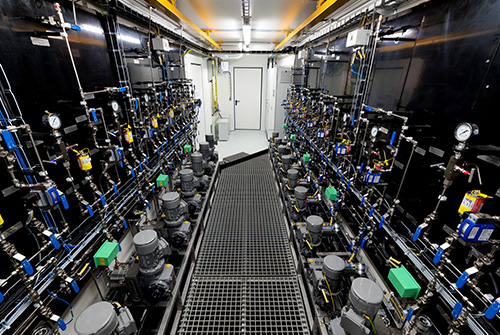
How Can Pressure Pulsations Be Reduced in Hydraulic Systems?
The most suitable solution depends on the type of installation, the fluid, operating pressures, pulsation frequency, and the equipment generating them. For this reason, a technical assessment is essential before installing any device.
The main measures that can be implemented include:
- Installing pulsation dampeners: These devices are designed to reduce pressure oscillations and smooth out fluctuations that occur during the operation of certain types of equipment.
- Reviewing pipe sizing: Appropriate design of pipe diameters, routing, and connection components can help improve the hydraulic performance of the circuit.
- Optimising pump and valve operation: Reviewing operating conditions, valve manoeuvres, and operating parameters can help reduce fluctuations and transient effects.
- Checking supports and fasteners: A properly installed and secured system can reduce vibration transmission and limit certain mechanical problems.
- Carrying out preventive maintenance: Regularly inspecting connections, seals, supports, and components makes it possible to detect signs of deterioration before they develop into failures.
- Measuring and analysing pressure: Using suitable instrumentation to record fluctuations helps identify their frequency, intensity, and possible source.
In certain applications, a properly selected and installed pulsation dampener can play a key role in protecting equipment and stabilising the circuit. However, its effectiveness depends on how well it matches the actual characteristics of the installation and whether the underlying causes of the problem have been correctly identified.
Hidracar: Solutions to Improve Hydraulic System Reliability
Pressure pulsations in pipes and hydraulic systems may initially seem like a minor issue, particularly when they only manifest as slight noises or vibrations. However, if they persist over time and remain uncontrolled, they can contribute to premature component wear, cause leaks, compromise system stability, and increase maintenance costs.
For this reason, identifying the source of pressure pulsations and implementing an appropriate solution is essential to improving the safety, efficiency, and durability of hydraulic systems.
At Hidracar, we recognise the importance of understanding the specific requirements of each application and selecting technical solutions suited to its operating conditions. Analysing the characteristics of the circuit, operating pressures, and equipment behaviour makes it possible to address the problem more effectively and avoid unnecessary interventions.
Is your installation experiencing vibrations, noise, or pressure fluctuations? Detecting pulsations early can make the difference between preventive maintenance and a costly breakdown.
Contact Hidracar to discover the solutions best suited to your installation and take steps towards a more stable, efficient, and reliable hydraulic system.
RELATED NEWS
In hydraulic systems, one of the most decisive—and often underestimated—factors is the effect of pressure pulsations. These periodic variations, which…
Read More
In the food industry, where precision, hygiene, and operational continuity are essential factors, every component within a pumping system plays…
Read More